
Cviček is an indigenous Dolenjska wine, unique on a global scale. It is light, refreshing, and recognizable by its characteristic reddish color and pleasant fruity acidity, making it the perfect companion to traditional Dolenjska cuisine.
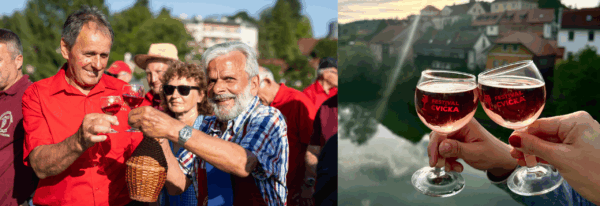
For winemakers of the Dolenjska region, cviček stands apart from other European wines in four key characteristics:
- Alcohol content
Cviček is the only wine in Europe with an officially permitted maximum alcohol content of just 10%. When Slovenia joined the EU, extensive effort and evidence were required to prove that this wine is part of our centuries-old tradition. Ultimately, the EU allowed it to be registered as a special exception with a lower alcohol percentage. - Blending of white and red grapes
Normally, white wines are made from white grapes and red wines from red grapes.
Cviček is one of only two wines in Europe officially permitted to blend white and red grape varieties — the other being the papal wine in France. - Sulfur content
Cviček contains the lowest legally allowed amount of sulfur in Slovenia: 120 mg/l, compared to up to 175 mg/l in other red varieties and up to 260 mg/l in white varieties. - PTP status
Since 2001, cviček has also held the status PTP (Recognized Traditional Denomination), meaning it can be produced only in specific parts of the Dolenjska region.
In the late 17th century, Johann Weikhard von Valvasor wrote in his famous work The Glory of the Duchy of Carniola that Dolenjska may consider itself a fortunate land — and he attributed this good fortune to its many vineyards and the remarkable wines of its hills.
According to Dr. Grande, the earliest mention of cviček dates back to 1781, when Marko Pohlin, an Augustinian monk, included “cvičk” (the Dolenjska pronunciation) in his Slovene–German–Latin dictionary. In German, he described it as Trestwein (wine made from grape pomace), and in Latin as agesta, meaning sour wine.
Cviček has been officially recognized as a wine blend since 1969. Historically, it was considered a peasant wine, drunk mostly by the common people.
Cviček emerged from the long-standing winemaking traditions of the Dolenjska region, where vintners blended white and red grapes — white varieties adding acidity and freshness, and red varieties contributing color and flavor. This blending practice dates back to the Middle Ages, when winemakers were forced to adapt to environmental and climatic conditions that often limited the production of higher-alcohol red wines.
Cvičkov dvor (Thr Court of Cviček)
Cvičkov dvor is an important symbol of Dolenjska winemaking and culture, representing tradition, pride, and the promotion of this unique wine. Its purpose is to raise awareness of cviček as cultural heritage, preserve local viticultural traditions, and promote the wine both at home and abroad.
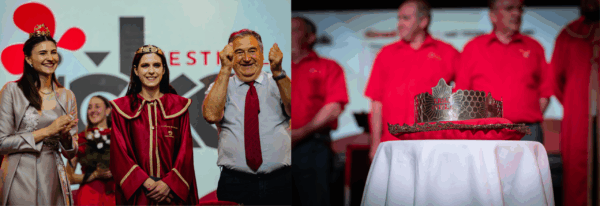
This eminent community — officially established on 6 September 2013 in the Cviček Hall (also known as the Embassy of Cviček) — consists of:
- The King of Cviček: The best cviček producer of the year, who represents Dolenjska winemakers with his expertise and dedication (title awarded since 1992).
- The Cviček Princess: A symbol of youth, tradition, and elegance, serving as an ambassador of cviček among younger generations (title awarded since 1999).
- The Ambassador of Cviček: A public figure who, through their work and influence, helps promote cviček and Dolenjska’s wine culture.
All three titles are awarded at the central annual event of Dolenjska winemakers — the Festival of Cviček, held since 1973 (previously in a more modest form known as “Cviček Week”).
Today, Cvičkov dvor stands as a symbol of unity among the region’s winemakers. Their mission is to preserve the authenticity of cviček and promote the Dolenjska wine-growing region. Through annual events, tastings, and cultural activities, they contribute to the growing recognition of this unique Slovenian wine, which now also enjoys respect at international wine competitions.