
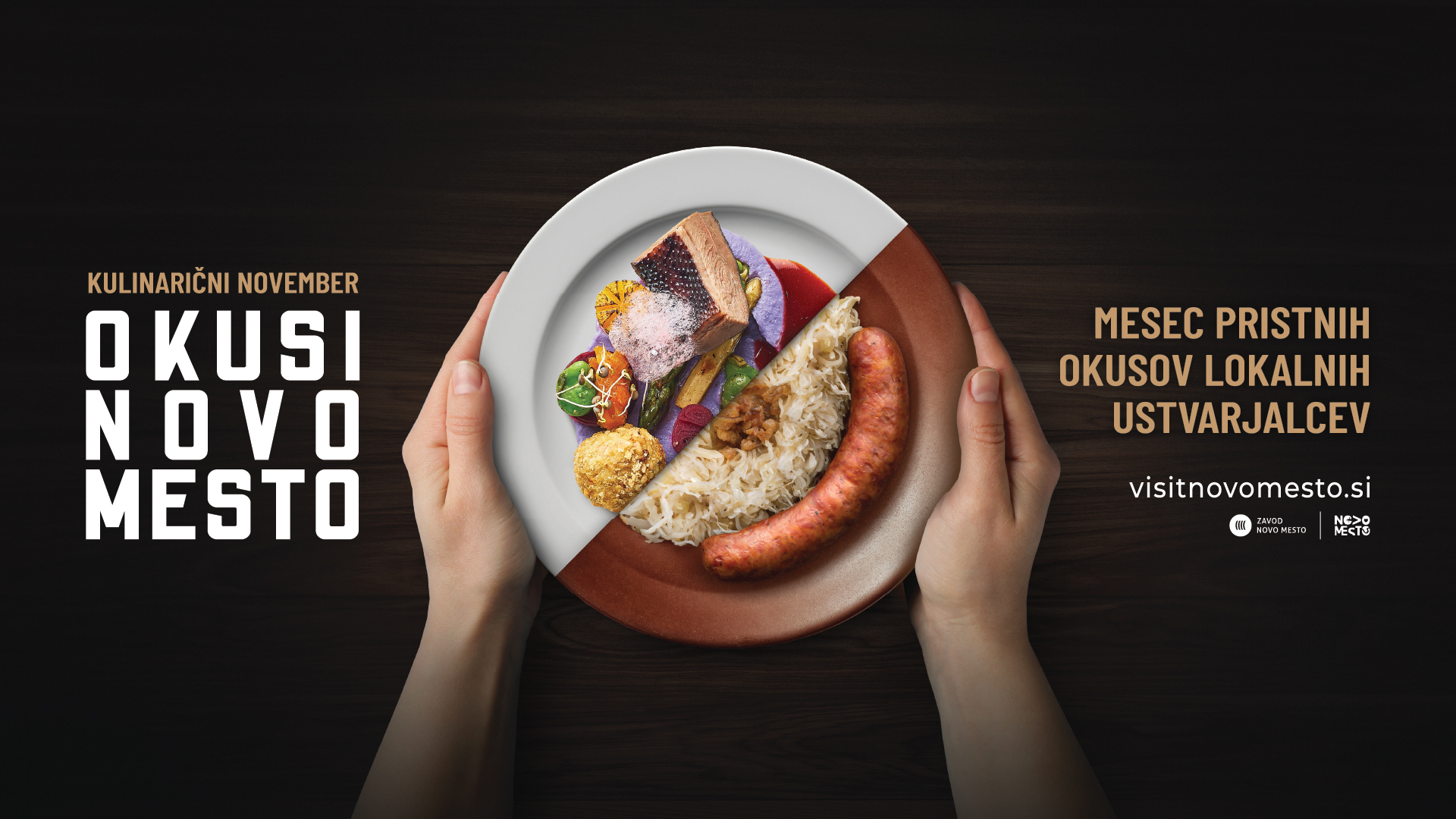
The culinary heritage of Dolenjska is preserved in home recipes, festive dishes, winemaking traditions and the stories of people who have passed them down through generations. Taste Novo Mesto brings these stories together and puts them in the spotlight through the collaboration of local restaurateurs, winemakers, associations and individuals. In 2025, it brought together a diverse group of local culinary creators for the first time, showing how traditional flavours can be given new life in contemporary gastronomy.
The Culinary Heritage of Dolenjska – Stories from Home Kitchens
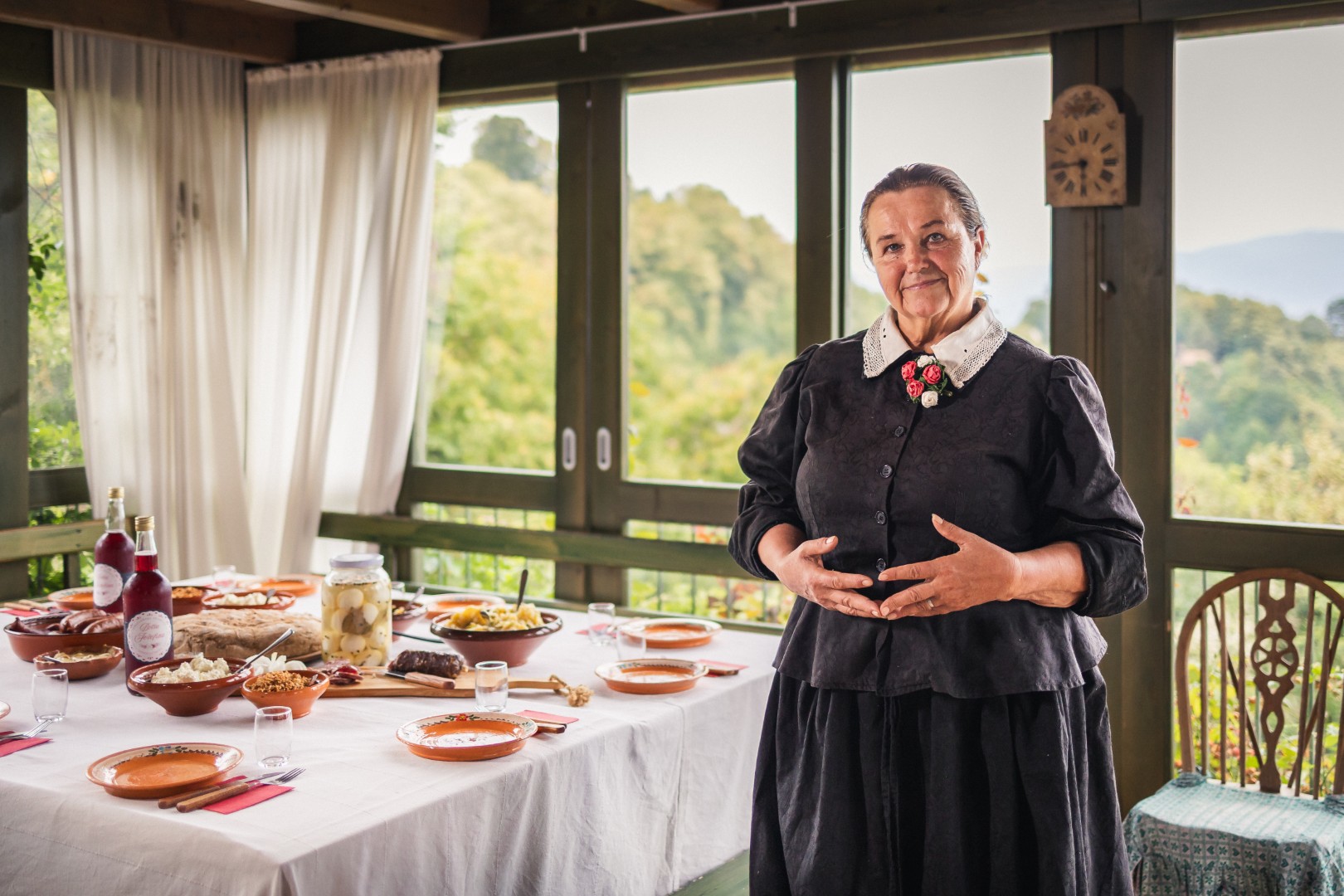
At the heart of Dolenjska, where tradition intertwines with creativity and a sense of home, lies a rich culinary heritage. Food in rural areas was once simple and often dependent on the ingredients available, yet women in the household used their knowledge, creativity and resourcefulness to prepare tasty and nourishing dishes. The economic circumstances of each household, the season and the availability of food all played an important role.
As Alenka Stražišar Lamovšek, curator of ethnology at the Dolenjski Museum Novo Mesto, points out, the cuisine of Dolenjska has always been closely connected to the landscape and the way people lived:
“In addition to the ingredients available, the time of year, holidays and everyday customs, the shaping of dishes was influenced by different cultural environments, as we lie at the crossroads of the Mediterranean, Alpine and Pannonian worlds. Over the centuries, numerous household recipes were developed, which today are an important part of our intangible cultural heritage.”
These household recipes, passed down from one generation to the next, represent an important part of the cultural identity of the region. Food was never merely a means of survival, but also a way of coming together, expressing a sense of belonging and preserving memories.
Dishes Connected with Festive and Everyday Life
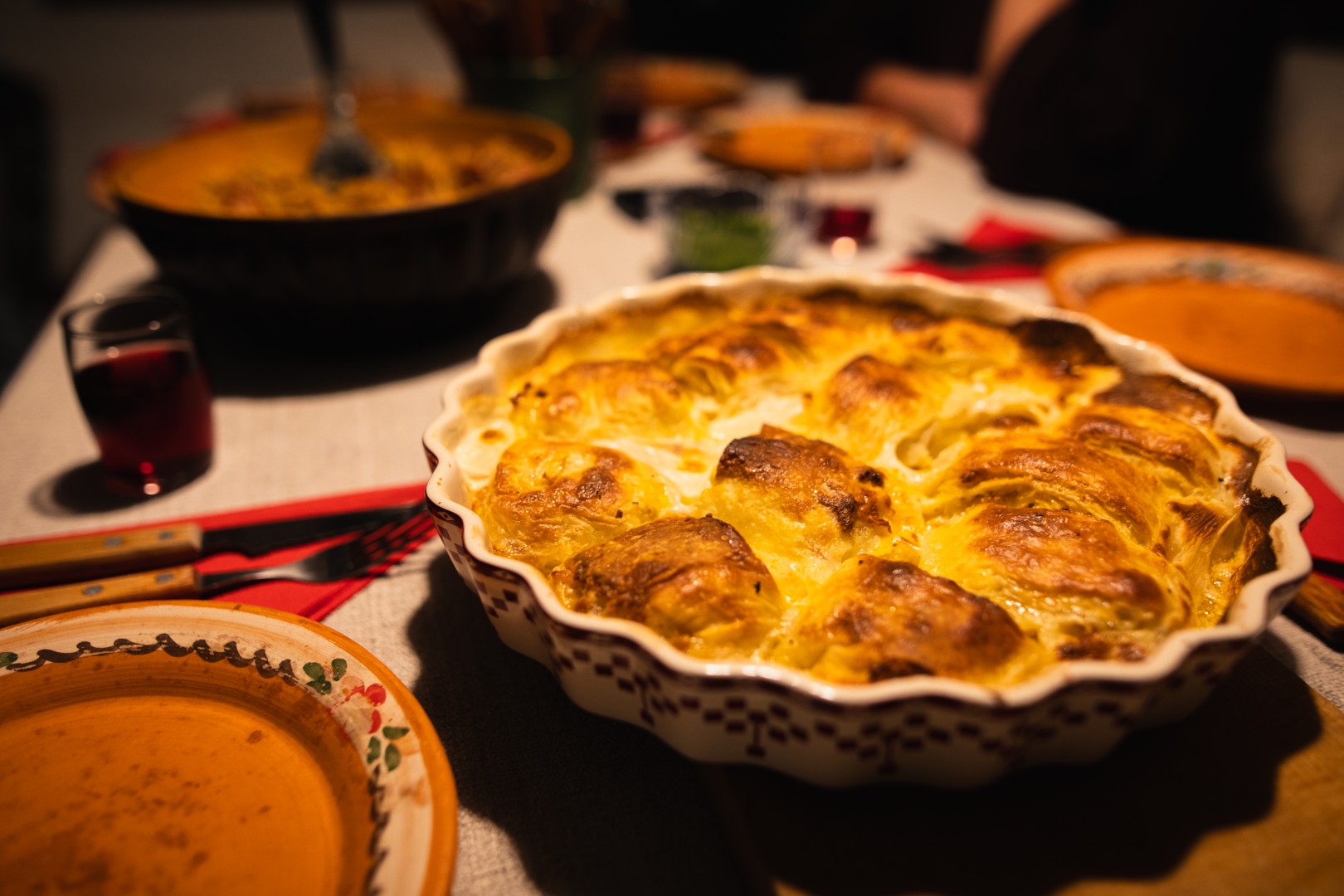
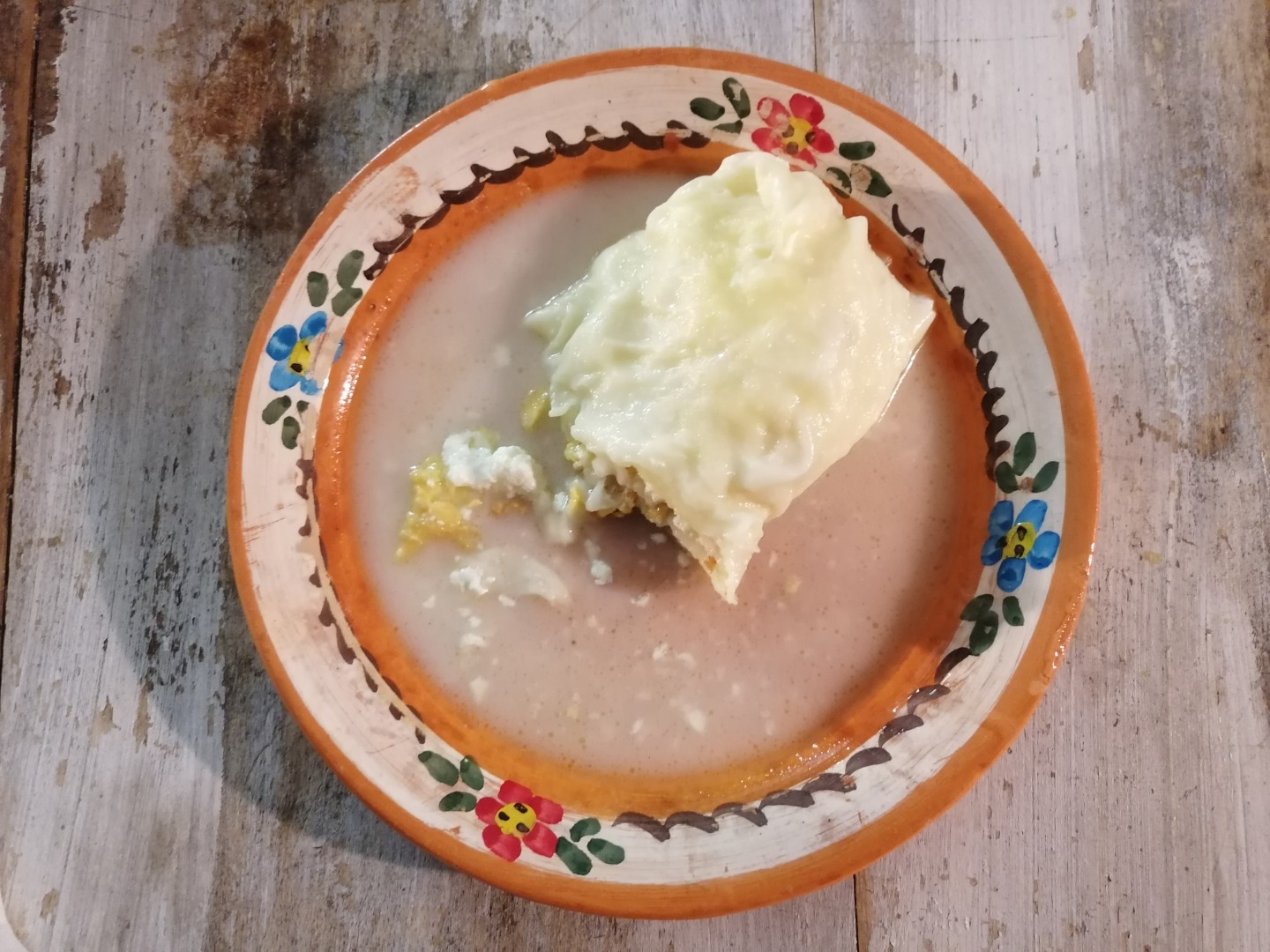
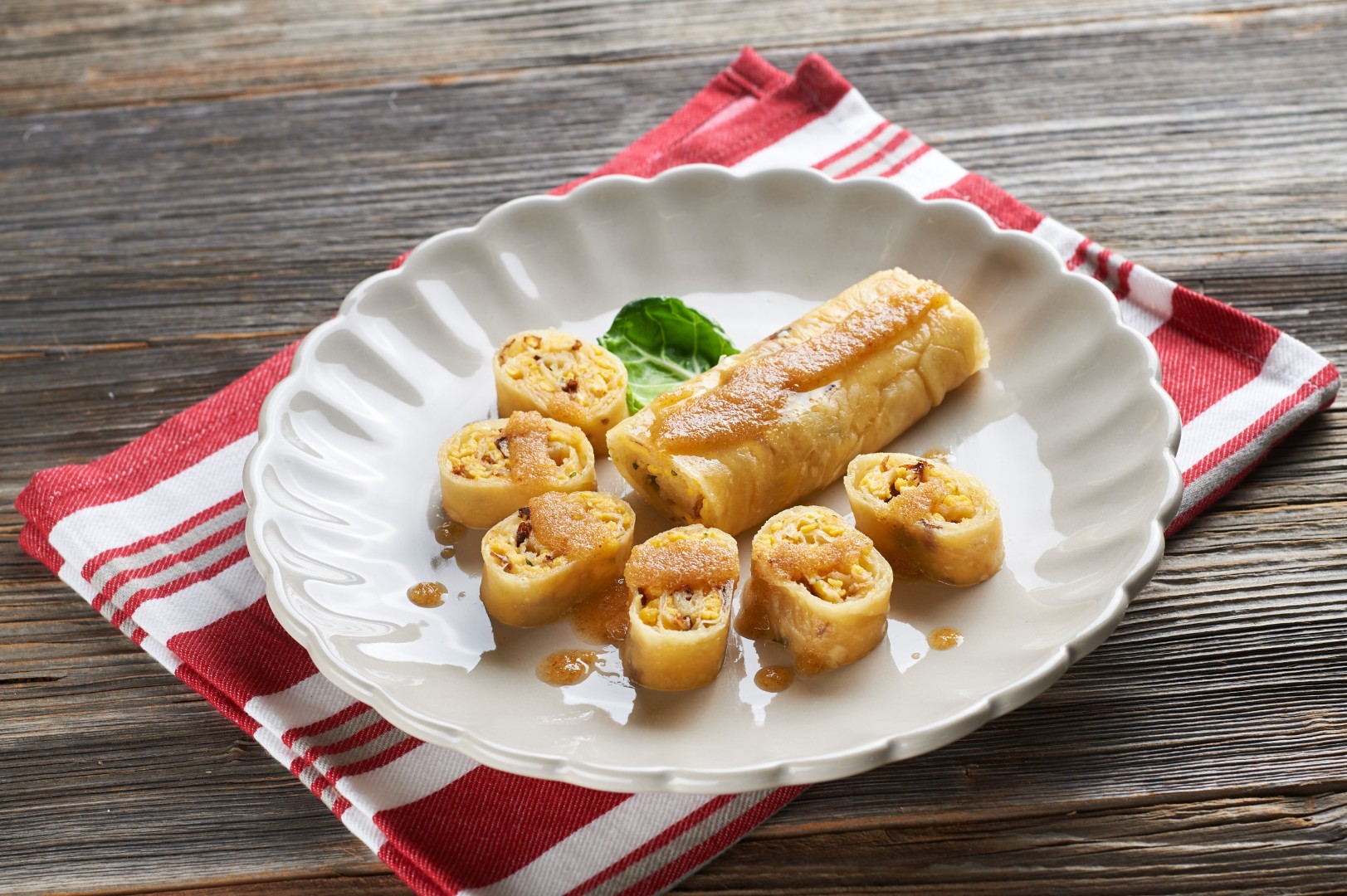
Among the characteristic dishes prepared in households in and around Novo Mesto, various types of štruklji hold a special place – filled with cottage cheese, walnuts, buckwheat or potatoes. Particularly distinctive are Dolenjska štruklji with egg topping and homemade cream, which were already described by the 19th-century writer Janez Trdina. Štruklji and other traditional dishes are also documented in archival material, providing evidence of their prevalence and importance in everyday life.
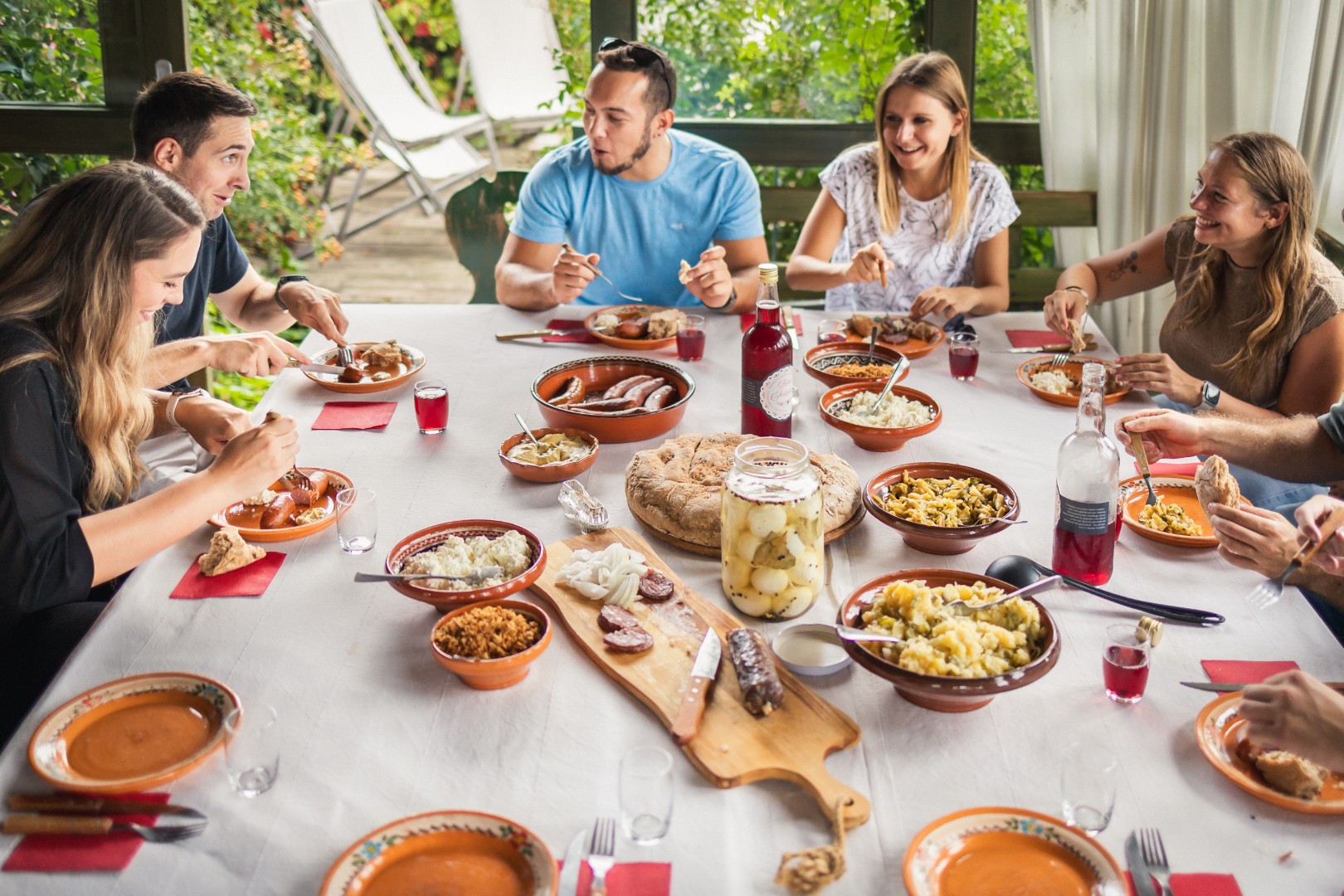
The culinary heritage of Dolenjska is closely connected with winemaking. St Martin’s celebrations (Martinovanje) remain one of the region’s most important festivities, when traditional festive dishes such as roast goose or duck, mlinci, red cabbage with apples and various types of potica are served. St Martin’s feast is not only a celebration of wine, but above all a celebration of community, bringing together families, friends and neighbours.
Dishes associated with traditional pig slaughtering (koline) are another important part of the region’s food heritage. Pečenice sausages, krvavice blood sausages, cracklings and other meat dishes were traditionally prepared during the winter, when family members and neighbours came together to work and socialise. Koline were an important event in rural community life – a time of cooperation, togetherness and abundance.
Knowledge, Ingredients and the Creativity of Home Cooks
The countryside provided the basic ingredients and encouraged the development of ways to preserve them for periods when food was less plentiful. Drying meat, smoking, pickling and other preservation techniques were an important part of food preparation throughout the year.
Recipes such as močnik, kumare u zos, žingrafi, various types of porridge, soups and other simple dishes bear witness to the creativity of home cooks, who knew how to prepare varied meals from the ingredients available to them.
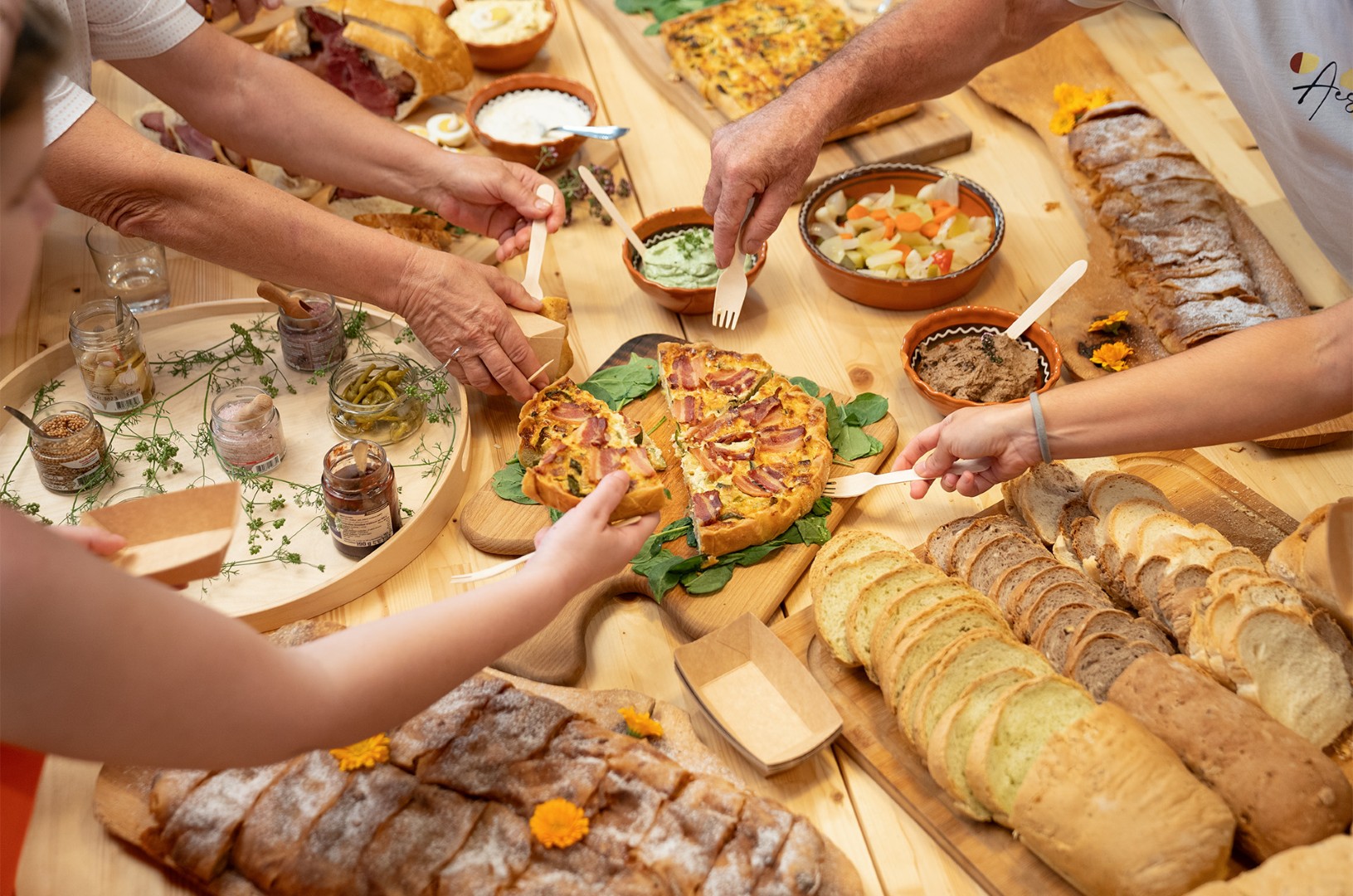
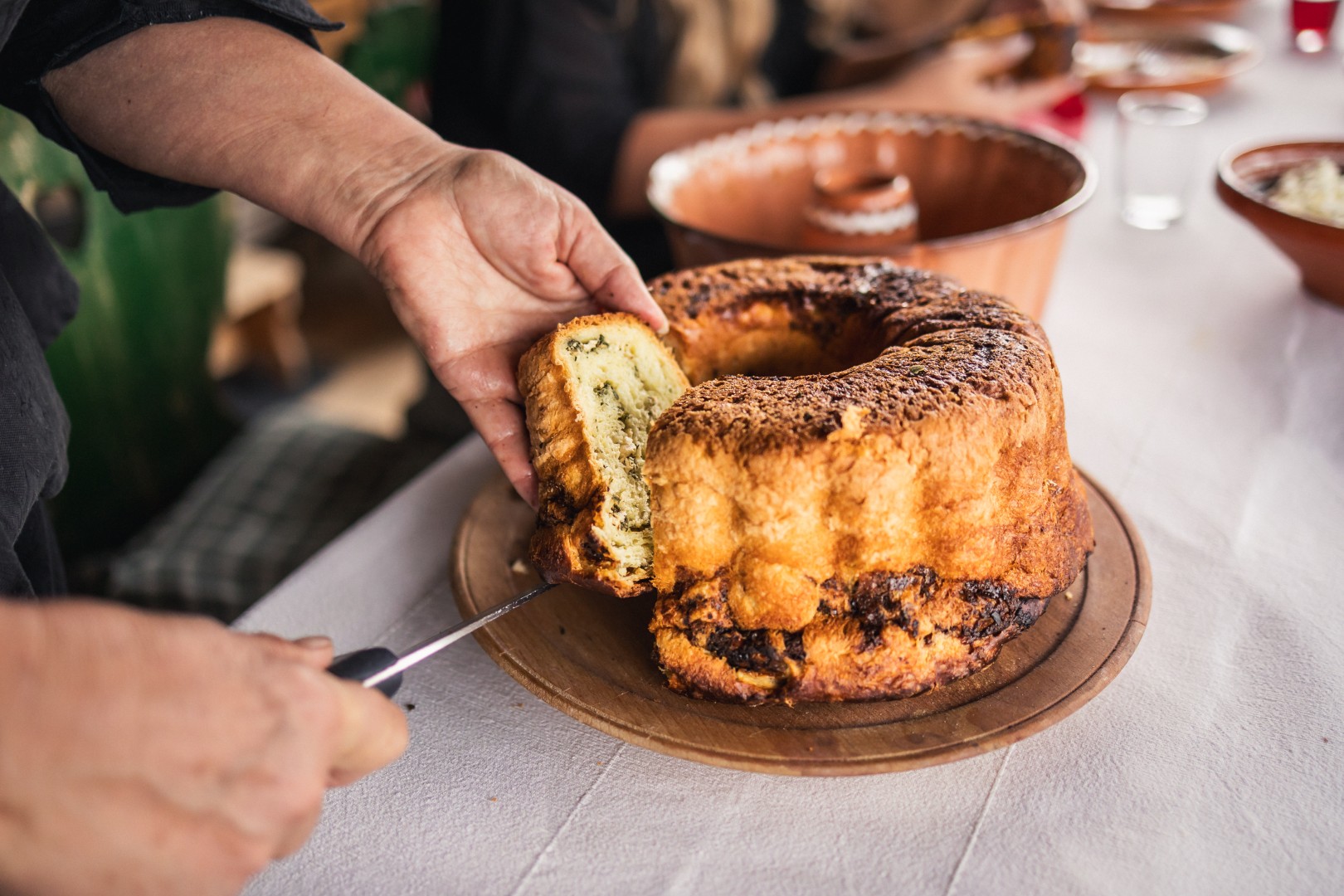
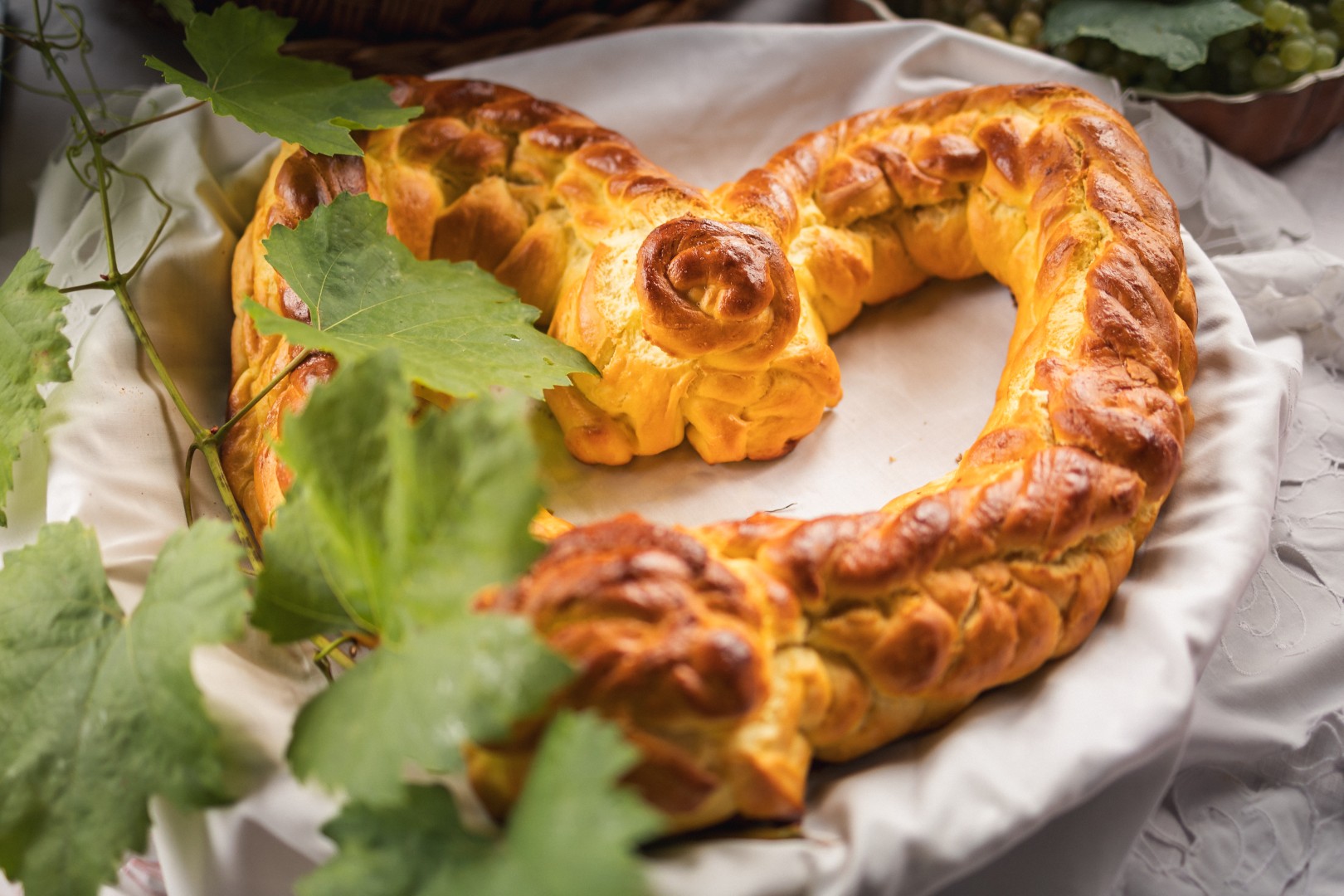
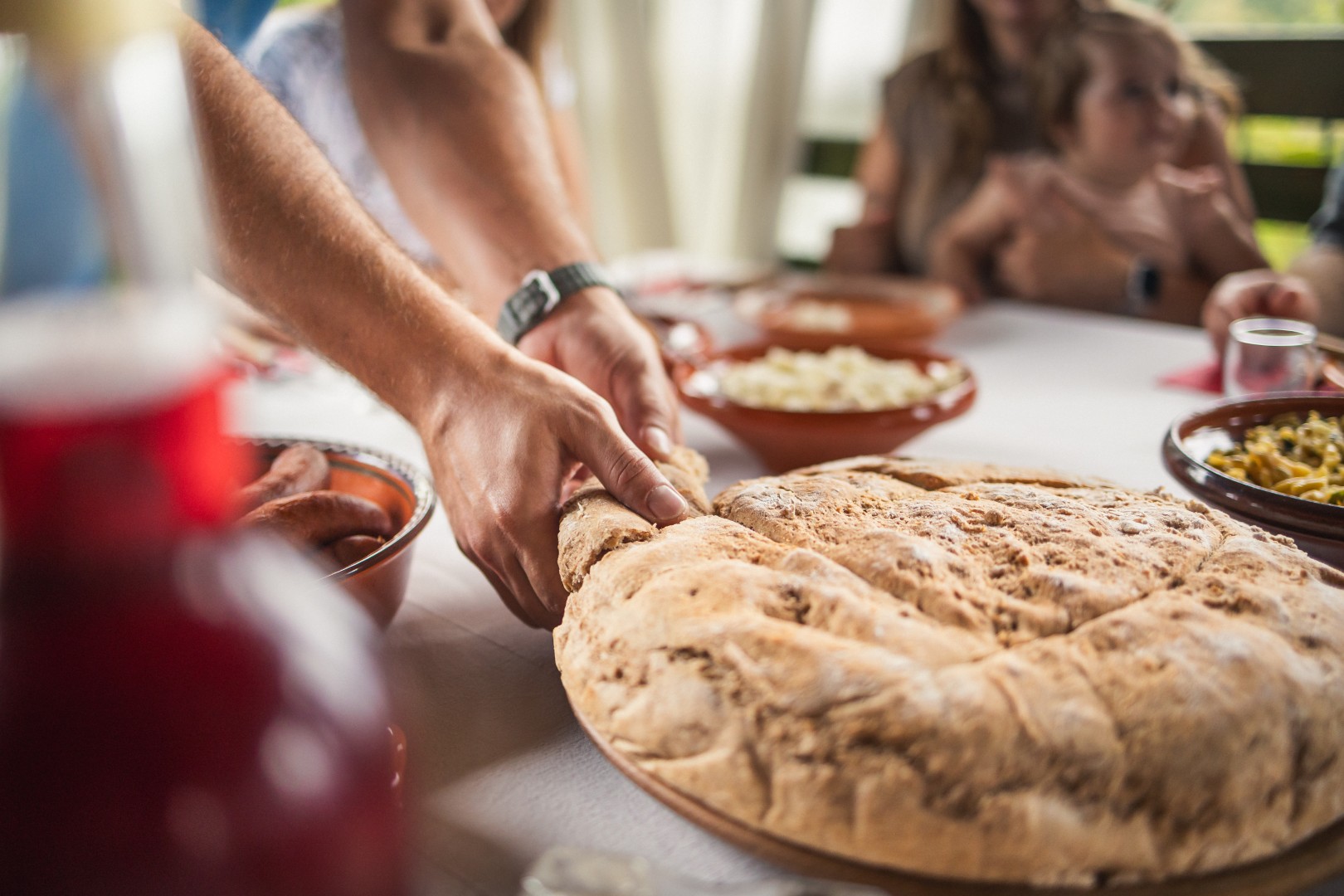
Bread held a particularly important place. Preparing dough with homemade yeast, heating wood-fired bread ovens, and baking pogače, poprtniki, potica and braided breads were processes rooted in knowledge, experience and family customs and traditions. Bread and festive dishes were not merely food, but also symbols of home, community and celebration.
From Culinary Heritage to New Interpretations
The cuisine of Dolenjska is rooted in local ingredients, knowledge and practices that have developed over centuries. Winemaking, fruit growing, the production of local specialities, and traditions associated with vineyard cottages and local celebrations all play an important role.
Bringing tradition and contemporary approaches together is at the heart of Taste Novo Mesto, coordinated for the first time in 2025 by Zavod Novo Mesto in cooperation with the Dolenjski Museum Novo Mesto and Dobrote Dolenjske.
The aim is not simply to present dishes during the November programme, but to encourage reflection on how local recipes, stories and knowledge can become a lasting part of Novo Mesto’s gastronomic offering.
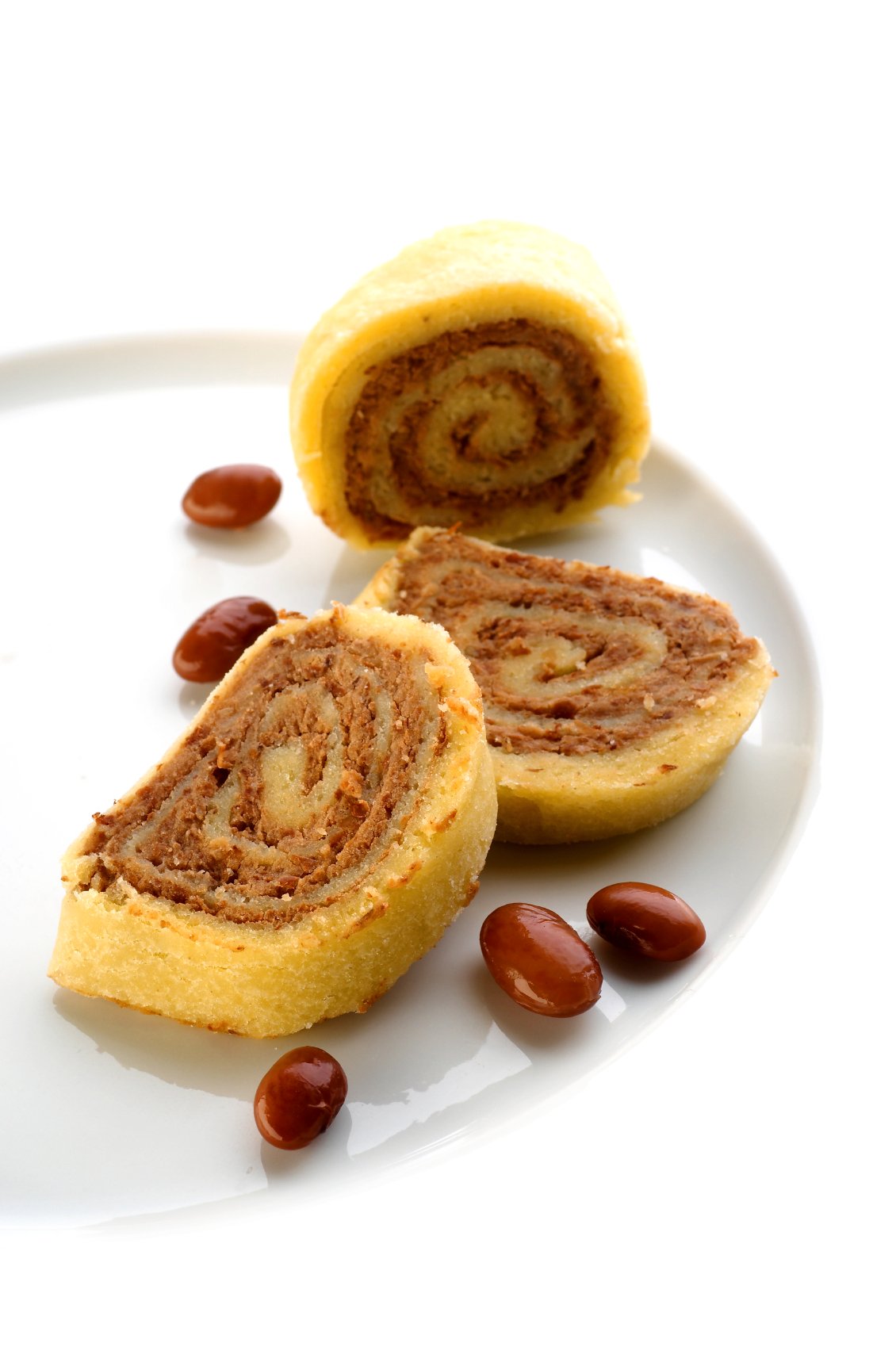
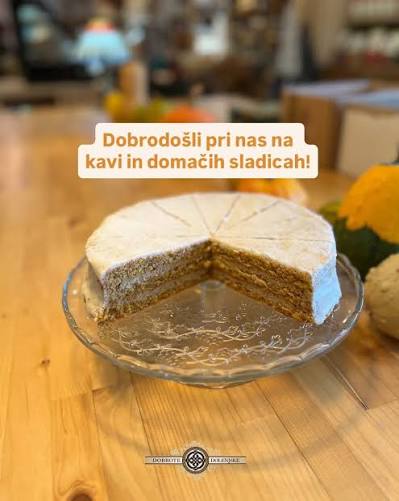
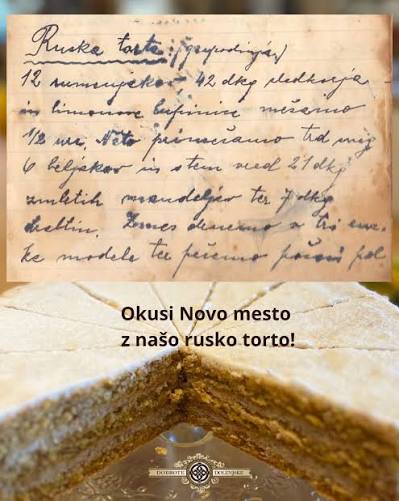
A good example of bringing heritage into the present is the Russian Cake, recreated by Dobrote Dolenjske based on a recipe from the Dolenjski Museum collection. As part of Taste Novo Mesto, it was presented as one of the dishes connecting the past and the present – archival material and culinary heritage were transformed into a product that is now available to a wider circle of visitors and local residents.
The Russian Cake therefore did not remain merely a special feature of the November programme, but became part of the regular offering. It is an example of how museum collections, knowledge of traditional recipes and collaboration with local creators can lead to new and living interpretations of culinary heritage.
Such examples show that heritage is not something fixed and unchanging. Through new approaches, knowledge and collaboration, it can continue to evolve while retaining its connection to the story of the place from which it originates.
Taste Novo Mesto – Bringing Local Providers and Stories Together
In the first year of the initiative, 13 providers from the Municipality of Novo Mesto presented their food, products and experiences, highlighting the diversity of the local gastronomic offering.
The participants included restaurateurs, winemakers, associations and individuals:
- Bistro Situla,
- Dobrote Dolenjske,
- Društvo vinogradnikov Trška gora – Novo Mesto,
- Gostilna Vovko,
- Gostilnica Don Bobi,
- Gostišče na trgu,
- Hiša Fink,
- Hotel pri Belokranjcu,
- Planinska koča pri Gospodični,
- Matjaževa domačija,
- TKD Trškogorsko srce,
- Vinska klet Colnar,
- Zavod Čebela.
Each presented its own story – from traditional dishes and recipes to wine experiences, local products and events connected with the culinary traditions and customs of the region.
November Celebrating Local Flavours
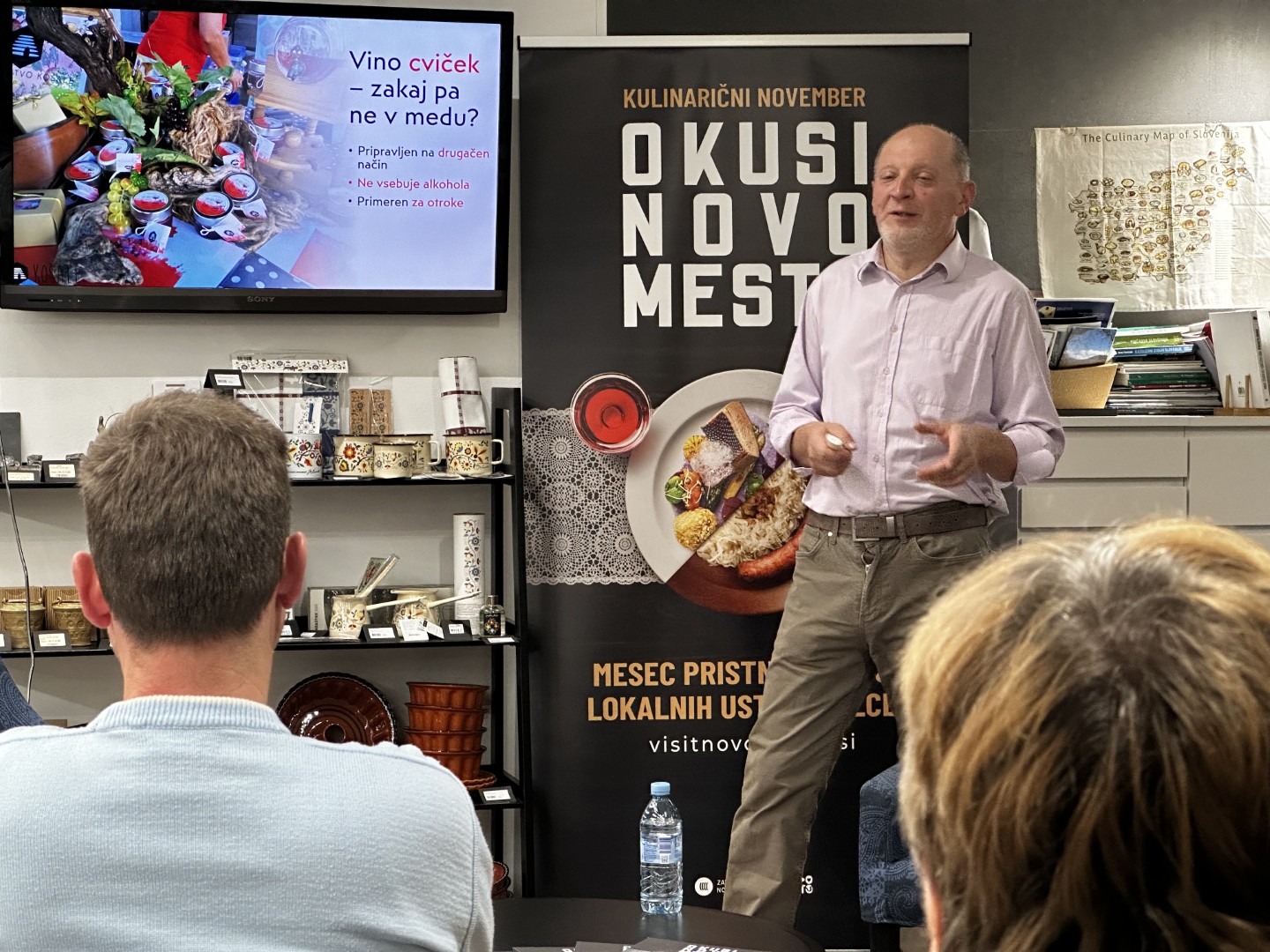
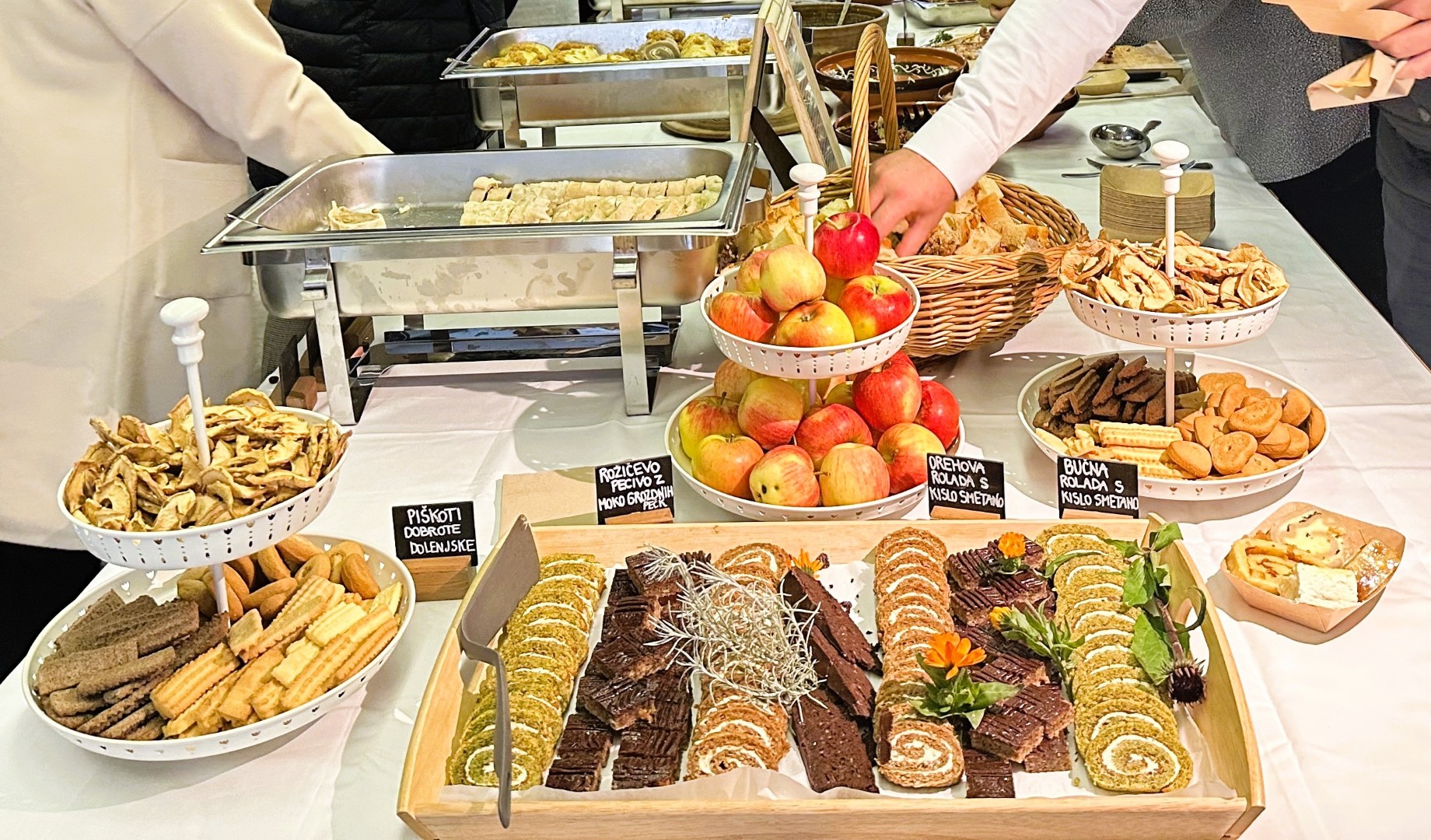
During the initiative, November became a month dedicated to exploring local cuisine. The content was presented in the printed and online Taste Novo Mesto brochure and accompanied by numerous events – culinary evenings, workshops, presentations, St Martin’s celebrations and other gatherings that brought together visitors, local residents and providers.
A particular highlight was the closing event, Taste Dolenjska! – 1st Štruklji Conference, organised in cooperation between Zavod Novo Mesto and Dobrote Dolenjske.
The international professional conference brought together experts, tourism providers and food enthusiasts and opened up discussion about the role of gastronomic heritage in the development of tourism. Examples of good practice were presented, while visitors had the opportunity to discover different types of štruklji and their significance within the local culinary tradition.
Preserving Heritage for the Future
The Dolenjski Museum Novo Mesto also plays an important role in documenting, researching and preserving culinary heritage. Its collections include objects, recipes, photographs, records and other testimonies that help us understand the way of life of previous generations. Collaboration helps ensure that this valuable knowledge is preserved and remains accessible to the wider community.
Local dishes, recipes and stories are more than just a part of the past – they are an important part of the identity of a place and an opportunity to create new experiences. When knowledge, the creativity of local providers and the interest of visitors come together, culinary heritage does not remain confined to memories, but comes to life in new forms and among new generations.
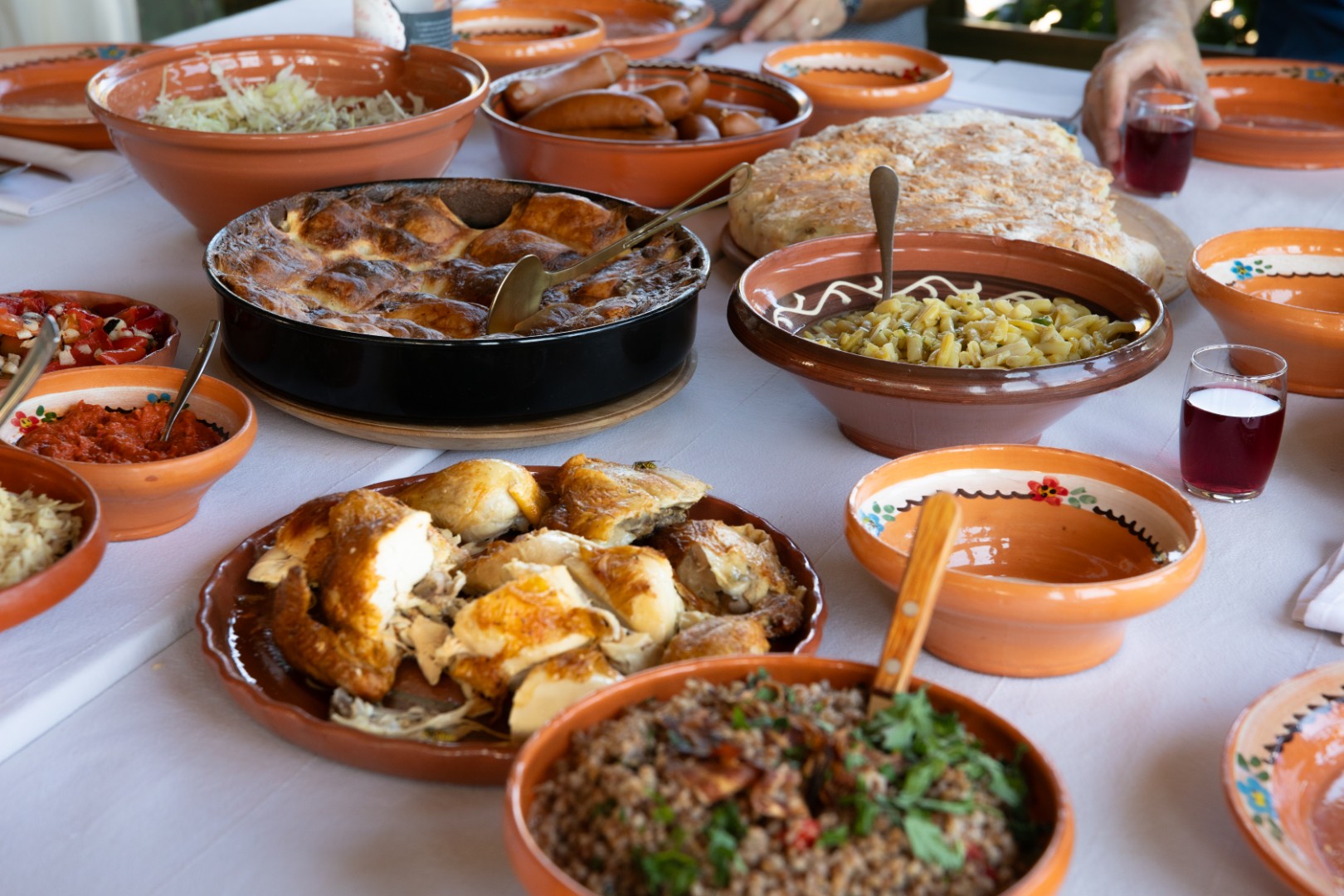
Taste Novo Mesto is a story of flavours, people and place. Of dishes that preserve memories of the past while creating new gastronomic stories for the future.